
How Much Does a PPL Actually Cost in Australia?
Updated: Jun 1
Glossy flight school brochures love to promise a Private Pilot Licence for a neat fifteen thousand dollars. But if you talk to anyone actually doing the training, you'll hear a different story. Every day, we speak with aspiring pilots who started their training based on those advertised quotes, only to find their bank accounts draining much faster than expected.
Getting your pilot's licence is one of the most rewarding adventures you will ever undertake. However, the aviation industry has a habit of marketing flight training based on the absolute legal minimum requirements set by the Civil Aviation Safety Authority (CASA). The reality of modern flight training is very different. If you are budgeting for exactly forty hours of flight time, you are in for a surprise.
At PPL PREP, we want you to succeed. We believe that the best student pilot is a fully informed student pilot. In this article, we are going to break down the hidden costs that schools often exclude from their initial quotes. We will unpack landing fees, the aviation medical class 2 cost, ASIC card application fees, the CASA PPL exam cost, and the inevitable extra flight hours you will need to become a safe and competent pilot.
Table of Contents
The 40-Hour Myth vs Reality
Under Part 61 of the Civil Aviation Safety Regulations, the absolute minimum aeronautical experience required to apply for a Private Pilot Licence (PPL) is 40 hours of flight time. This must include at least 10 hours of solo flight time and five hours of solo cross-country navigation.
Flight training operators frequently use this 40-hour baseline to create their marketing material. It makes the private pilot licence cost Australia seem highly accessible.
Here is the truth: almost nobody finishes in 40 hours.
The modern training environment is complex. You have to learn how to handle the aircraft, master radio communication, navigate complex airspace, and manage emergency procedures. Learning all of this takes time and repetition. Furthermore, unpredictable Australian weather means you will often face cancelled lessons, which leads to "skill fade" between flights. When you finally get back in the air, you have to spend the first part of your lesson revising what you forgot.
The national average to complete a PPL is actually between 65 and 75 hours.
When you factor in an extra 25 to 35 hours of dual instruction at four hundred dollars an hour, the gap between the advertised price and your actual cost widens by upwards of ten thousand dollars. Understanding this difference early on is the best way to plan your finances without stress.
Summary Table: Advertised Quote vs Realistic Budget
To give you a clear picture right away, here is a quick-reference table comparing a typical flight school quote (based on legal minimums) against a realistic budget for the average Aussie student pilot.
Note: Prices are estimates based on average rates for a Cessna 172. Your actual costs will vary depending on where you train, your learning pace, and the aircraft type.
Aircraft Hire Rates: Sydney, Melbourne, and Brisbane
The biggest factor in your total cost of PPL Australia is the hourly rate of the aircraft you fly. Most primary training is conducted in a four-seat Cessna 172 or a Piper PA28 Warrior.
Flight schools typically charge a "wet hire" rate, which means the cost of aviation fuel (Avgas) and oil is included in the hourly price. However, you need to pay attention to how they record the time. Most schools charge based on the VDO meter, which starts ticking the moment the engine turns on. If you are sitting on the tarmac waiting for air traffic control clearance, you are paying by the minute.
Rates vary significantly across the country due to different overheads, hangar rental costs, and local competition.

Learn to Fly Cost Sydney
If you are looking at the learn to fly cost Sydney, you will generally be flying out of Bankstown Airport (YSBK) or Camden Airport. Bankstown is incredibly busy. This means more time spent holding short of the runway with the engine running.
Dual Instruction: Expect to pay between $405 and $465 per hour for a Cessna 172.
Solo Hire: Ranges from $275 to $385 per hour.
Learn to Fly Cost Melbourne
The learn to fly cost Melbourne is heavily concentrated around Moorabbin Airport (YMMB). Moorabbin has a very high density of flight schools, keeping rates somewhat competitive. However, Melbourne's famously variable weather can draw out your training timeline.
Dual Instruction: Averages between $439 and $458 per hour.
Solo Hire: Typically sits between $270 and $390 per hour.
Learn to Fly Cost Brisbane
When researching the learn to fly cost Brisbane, Archerfield Airport (YBAF) is the primary hub. Archerfield generally offers slightly softer hourly rates than its southern counterparts, especially if you train in older model aircraft with traditional analogue gauges.
Dual Instruction: Generally costs between $370 and $500 per hour (higher end is for glass-cockpit models).
Solo Hire: Highly accessible at $245 to $290 per hour.
Hidden Cost 1: Landing Fees and Airservices Charges
Every time the wheels of your training aircraft touch the runway, somebody has to pay for the pavement. Major training aerodromes charge weight-based landing fees for every full stop landing and every touch-and-go circuit.
During your early training, you will spend hours flying in the circuit pattern. You might perform up to ten take-offs and landings in a single one-hour lesson. Aerodromes like Bankstown, Moorabbin, and Archerfield charge minimum fees per movement or per tonne of aircraft weight. A full stop landing can incur a minimum flat fee of around $27, while individual training circuits generally cost around $8 to $13 each.
Most flight schools do not include these landing fees in their headline hourly rate. They are usually added to your invoice at the end of the month as a separate line item. Over the course of 70 hours of training, these incremental charges will easily add $1,000 to $1,500 to your total bill.
Hidden Cost 2: The Aviation Medical

Before you can fly solo, you must hold a valid aviation medical certificate. This is a strict CASA requirement.
For a Private Pilot Licence, the standard requirement is a Class 2 Medical Certificate. To get this, you must book an appointment with a Designated Aviation Medical Examiner (DAME).
The aviation medical class 2 cost is usually split into several parts:
DAME Consultation Fee: Typically between $160 and $220.
CASA Processing Fee: A non-refundable $65 paid directly to CASA via their online portal.
Additional Testing: If it is your first medical, or if you are over a certain age, you will need extra tests. Expect to pay around $55 for an ECG, $55 for a hearing audiogram, and $45 for fasting blood tests (glucose and cholesterol). If you wear glasses, you may also need a specialist eye exam for around $100.
All up, your first Class 2 medical can set you back close to $500.
(Note: CASA recently introduced the Basic Class 2 medical, which can be done by a standard GP for a much lower cost. However, it comes with strict operational limits. It is a great way to save money, but make sure the restrictions align with your flying goals.)
Hidden Cost 3: ASIC Card Application Fees
Because primary training aerodromes are security-controlled airports, you cannot wander onto the tarmac without a valid background check. This comes in the form of an Aviation Security Identity Card (ASIC).
You will need to apply for an ASIC card (be sure to read our dedicated guide on how to apply for an ASIC card for step-by-step instructions) early in your training. The background check is processed by AusCheck.
Flight schools rarely include the ASIC fee in their promotional packages. Depending on the issuing body you use, the full cost of a standard ASIC card ranges from $240 to $308. Some issuers also require a $50 refundable deposit to ensure you return the card when it expires.
Hidden Cost 4: Ground Theory and CASA Exams
Flying the plane is only half the battle. To earn your PPL, you must pass the CASA PPL theory exam. The syllabus is vast, covering aerodynamics, meteorology, navigation, human factors, and air law.
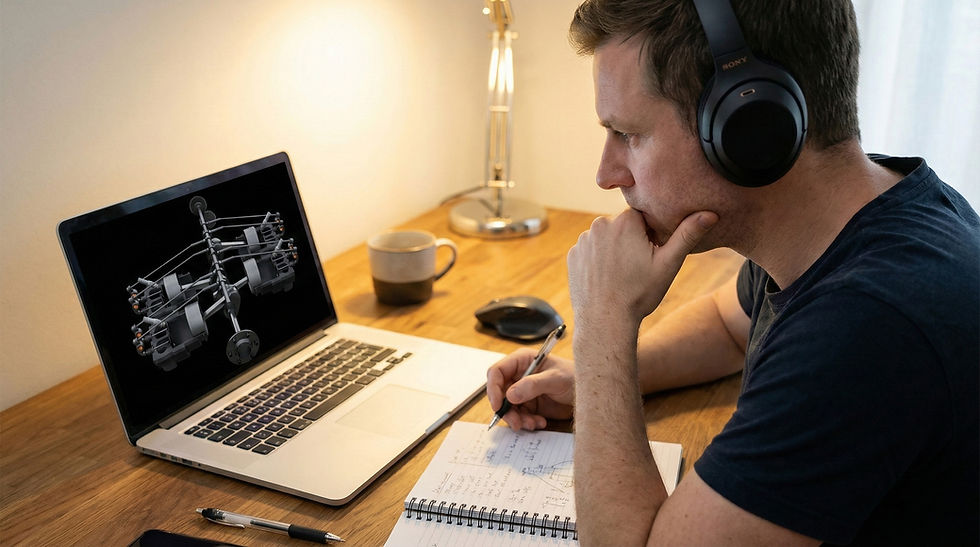
Many students try to save money by spending around $400 on physical textbooks, only to realise those books go out of date as soon as aviation regulations change. Others shell out up to $1,500 for full-time ground school classes at the airport. At PPL PREP, we offer a smarter, highly cost-effective alternative. We provide a fully guided online ground school that delivers the structure of a classroom for a fraction of the cost of traditional books. Plus, our digital platform is constantly updated, meaning you are always studying the most current CASA rules without ever having to buy a new edition.
When you are ready to sit the actual exam, you have to pay the CASA PPL exam cost. The exam is administered by Aspeq and costs a total of $217.24 per attempt (which includes a $65 CASA fee and a $152.24 invigilator fee). If you do not pass on your first try, you have to pay the full fee again.
Additionally, the exam is open-book, but you are strictly required to bring your own permitted materials. You can choose to use either the Airservices Australia list or the Jeppesen list (you cannot mix and match). Buying a full set of current documents, including the Aeronautical Information Publication (AIP), En Route Supplement Australia (ERSA), Visual Terminal Charts, and a manual flight computer, will cost you another $300 to $400.
Finally, you must also pass an English Language Proficiency (ELP) assessment. Even if you were born in Australia and have spoken English your whole life, this is a mandatory regulatory test. An assessment by an approved examiner generally costs between $110 and $132.
The Realistic PPL Budget Breakdown
Hidden Cost 5: Personal Pilot Equipment
While your flight school will happily lend you a headset for your first trial flight, you will be expected to purchase your own gear fairly early in your flight training.
The most essential piece of equipment is your aviation headset. It protects your hearing and ensures you can understand air traffic control. An entry-level passive noise reduction headset (like a Rugged Air or basic David Clark) will cost around $250. However, if you plan to fly long term, most instructors recommend investing in an active noise cancellation headset, such as the Bose A30, which retails for over $1,500.
You will also need to buy an official Australian pilot logbook (around $35), a pilot knee-board for organising your charts in the cockpit, and a high-visibility vest for walking on the tarmac.

Hidden Cost 6: The Practical Flight Test
The final hurdle is the PPL practical flight test. This is the day an approved flight examiner sits in the right seat and tests your handling skills and emergency procedures.
The financial impact of test day is twofold. First, you have to pay the testing examiner for their time. Independent flight examiners set their own rates, but the industry standard flight test fee ranges from $700 to $1,100.
Second, you have to supply the aircraft. A full PPL flight test generally takes around 3 to 3.5 hours of engine time. Even at a solo hire rate of $300 an hour, the aircraft hire alone will cost you over $1,000. Therefore, you need to have roughly $2,000 set aside purely for the final day of your training.
Frequently Asked Questions
How much does a pilot licence cost in Australia from start to finish?
If you are aiming for a Private Pilot Licence, a highly realistic budget is between $30,000 and $38,000. This covers average flight hours (around 70 hours), ground theory, landing fees, medical certificates, exams, and personal equipment. Relying on the 40-hour minimum quotes of $15,000 to $20,000 often leaves students stranded halfway through their training without funds.
What is the CASA PPL exam cost?
The official CASA PPL theory exam is administered by Aspeq and currently costs $217.24 per attempt. This consists of a $65 CASA regulatory fee and a $152.24 invigilator fee. You must also supply your own permitted materials (like the AIP, ERSA, and charts), which can cost a few hundred dollars to acquire.
How much does an aviation medical class 2 cost?
You should budget roughly $400 to $500 for your initial Class 2 medical. This includes the DAME consultation fee ($160 to $220), the CASA processing fee ($65), and additional baseline testing such as an ECG, audiogram, and blood tests.
Does the learn to fly cost Sydney differ much from Brisbane or Melbourne?
Yes, geographic location plays a big part in hourly aircraft rates. Sydney Bankstown generally features the highest hourly rates and longest ground delays due to dense traffic. Melbourne Moorabbin is highly competitive but subject to weather delays. Brisbane Archerfield typically offers slightly softer wet hire rates, making the early stages of training slightly more affordable.
Can I save money by getting an RPL first?
A Recreational Pilot Licence (RPL) is a great stepping stone. It allows you to fly within 25 nautical miles of your departure aerodrome without doing the expensive cross-country navigation training required for the PPL. The average cost for an RPL is around $15,000 to $18,000. Many students get their RPL to lock in their foundational skills, and then upgrade to a PPL later when they have saved more money.
Conclusion and Next Steps
Learning to fly is an investment of time, energy, and capital. By understanding the true cost of a private pilot licence, you protect yourself from nasty financial surprises and ensure you can complete your training without taking stressful, months-long breaks that erode your skills.
The best way to keep your flight training costs under control is to show up to every lesson prepared. Every minute you spend in the air trying to understand a concept that you should have learned on the ground is money wasted.
At PPL PREP, we are dedicated to helping Aussie student pilots pass their CASA exams on the first try and become highly knowledgeable aviators. By mastering the theory before you step onto the tarmac, you will progress through your flying lessons much faster, saving thousands of dollars in dual instruction fees.
Ready to tackle your ground theory and keep your training budget on track? Check out our comprehensive online ground school courses at PPL PREP today and take the stress out of your flight training.


Comments